Türkiye's Energy Crossroads: Why the Nation Poised to Power Europe Is Also Redefining Sustainable Agriculture

Prologue: What We Forgot
For 99% of human history, there were no synthetic molecules in our food. No petroleum-derived pesticides. No monoculture fields stripped of microbial life. No ultra-processed compounds engineered to override our satiety signals.
For 99% of human history, we ate what the earth provided — seasonal, local, whole, alive.
Then, in the space of roughly 80 years — a blink in evolutionary time — we dismantled that relationship almost entirely.
The consequences are not theoretical. They are epidemiological, neurological, and immunological. And the scientific literature is catching up to what traditional cultures never forgot.

Part I: The Soil Microbiome — The Intelligence Beneath Our Feet
1 teaspoon of healthy organic soil contains more microorganisms than there are humans on Earth.
A living organic soil hosts bacteria, fungi, protozoa, nematodes, and a vast mycorrhizal network — what some researchers have begun calling the wood wide web — through which plants communicate, share nutrients, and signal stress. This is a collaborative intelligence, operating on timescales and in dimensions entirely invisible to the human eye.
When we apply synthetic fertilizers and pesticides, we do not simply feed plants or kill pests. We systematically destroy this intelligence. We replace a living ecosystem with a chemical dependency. And the plants that grow in this dead substrate — while visually indistinguishable — are measurably different at the molecular level.
Research published in the British Journal of Nutrition found that organic crops contain significantly higher concentrations of antioxidants — up to 69% more — compared to conventionally grown equivalents.
Synthetic protection removes the stress. And with it, the medicine.

Part II: The Human Microbiome — Our Internal Ecosystem
The gut microbiome — the ecosystem of trillions of microorganisms living within the human gastrointestinal tract — is now understood to be not merely a digestive aid, but a regulatory system of extraordinary complexity. It modulates immune function, produces neurotransmitters, synthesizes vitamins, and communicates directly with the brain via the vagus nerve.
Organic plant foods contain higher concentrations of prebiotic fibers, polyphenols, and phytonutrients that nourish beneficial gut bacteria. According to research published in PubMed Central, glyphosate-based herbicide residues in conventional produce may contribute to microbial dysbiosis — disrupting the very ecosystem that regulates our immunity and mood.
The quality of what we put into our bodies determines the quality of the ecosystem within them.
Part III: Traditional Knowledge as Empirical Science
Before randomized controlled trials, humanity ran the largest pharmacological experiment in history: 10,000 years of empirical observation of plant-based medicine across generations. Ayurveda. Traditional Chinese Medicine. Unani. Anatolian folk medicine. These are compressed databases of clinical observation — refined by failure, validated by survival.
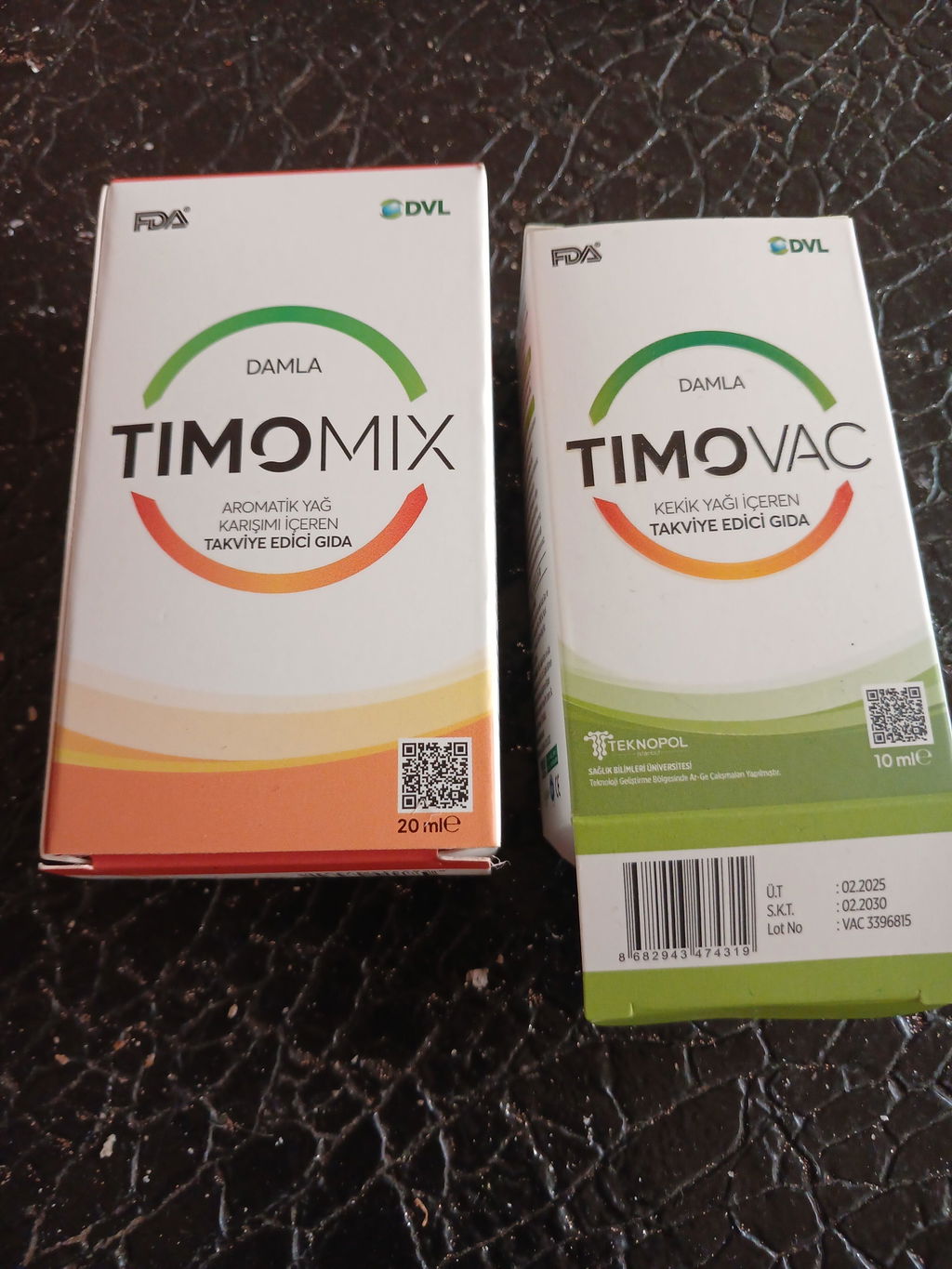
Thyme (Thymbra spicata, Thymus vulgaris) was used across Mediterranean cultures for thousands of years before the European Medicines Agency (EMA) formally recognized it as a traditional herbal medicine for cough relief. Our own Timovac Thyme Oil — standardized to 75% Carvacrol — is built on exactly this heritage.
Traditional knowledge did not lack evidence. It lacked our laboratory tools to articulate the mechanisms it had already discovered.

Part IV: Organic Botanicals — The Difference That Cannot Be Faked
Not all botanical supplements are equal. The difference between a synthetically replicated compound and its whole-plant organic equivalent is biochemical, not philosophical.
The Entourage Effect
A single botanical like thyme contains hundreds of compounds — carvacrol, thymol, rosmarinic acid, luteolin, apigenin — operating in synergy. This is why our Timomix 8-Botanical Blend is formulated as a full-spectrum extract, not a synthetic isolate. The whole is measurably more effective than any isolated part.
Bioavailability
Organically grown plants produce compounds with higher bioavailability. The plant's interaction with living soil microbes influences the chemical structure of its secondary metabolites in ways that directly affect absorption in the human body.
Absence of Residues
Certified organic products carry the assurance of no synthetic pesticide residues and no GMO interference. For supplements consumed daily at therapeutic doses, this is not a premium — it is a baseline. See our full certification and quality documentation.

Part V: Benjamin's Gardens — Rooted in This Philosophy
At Benjamin's Gardens, we did not arrive at organic, traceable botanical sourcing because it is fashionable. We arrived here because it is correct.
Our Aegean sourcing partners cultivate thyme, oregano, sage, and other medicinal botanicals using practices that preserve soil biodiversity and avoid synthetic inputs. Our processing infrastructure — GMP-certified, ISO 22000 compliant — is designed to protect what nature has built.
Explore our core products:
- Timovac — Thyme Oil Drops (75% Carvacrol): EMA-recognized, farm-to-bottle traceability
- Timomix — 8-Botanical Aromatic Blend: University R&D formulation, full-spectrum extraction
- Timovac + Timomix Energy Set: The complete botanical protocol
- All Supplements: Browse the full range
Epilogue: The Return
We are not inventing a new way of living. We are remembering an old one — equipped with the scientific language to defend it.
Nature is not a resource to be optimized. It is a system to be respected — one that, when left sufficiently intact, provides exactly what the human body evolved to need.
The most sophisticated thing we can do for our health in 2026 is also the most ancient: return to the intelligence of the earth.
For further reading, we recommend the WHO Food Safety resources and the EMA Herbal Medicine guidelines.
Benjamin's Gardens — Premium organic botanicals from the Aegean, for the world.
📧 info@benjaminsgardens.com | 📱 +90 530 588 18 21 | Instagram: @benjamins.gardens
🌐 Wholesale & Export